 |
|
|
 |
|
 |
|
|||
|
||||
|
||||
|
Maryland State Archives Adam Goodheart Collection MSA SC 5826 msa_sc5826_3_1-0007 Enlarge and print image (918K) |
|
|
|
|
|
|
|
|||
|
||||
|
||||
|
Maryland State Archives Adam Goodheart Collection MSA SC 5826 msa_sc5826_3_1-0007 Enlarge and print image (918K) |
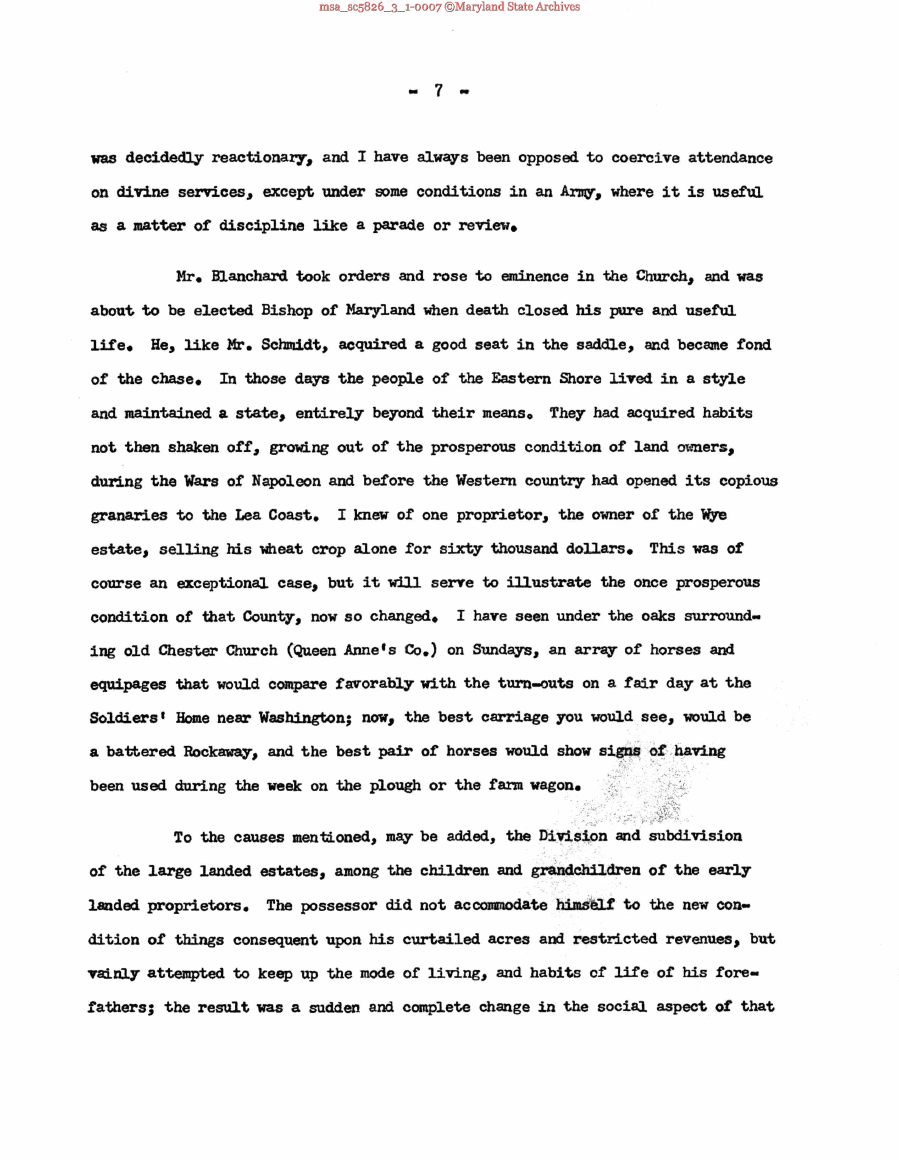
| msa_sc5826_3_1-0007 ©Maryland State Archives - 7 - was decidedly reactionary, and I have always been opposed to coercive attendance on divine services, except under some conditions in an Army, where it is useful as a matter of discipline like a parade or review. Mr. Blanchard took orders and rose to eminence in the Church, and was about to be elected Bishop of Maryland when death closed his pure and useful life. He, like Mr. Schmidt, acquired a good seat in the saddle, and became fond of the chase. In those days the people of the Eastern Shore lived in a style and maintained a state, entirely beyond their means. They had acquired habits not then shaken off, growing out of the prosperous condition of land owners, during the Wars of Napoleon and before the Western country had opened its copious granaries to the Lea Coast. I knew of one proprietor, the owner of the Wye estate, selling his wheat crop alone for sixty thousand dollars. This was of course an exceptional case, but it will serve to illustrate the once prosperous condition of that County, now so changed. I have seen under the oaks surround- ing old Chester Church (Queen Anne's Co.) on Sundays, an array of horses and equipages that would compare favorably with the turn-outs on a fair day at the Soldiers' Home near Washington; now, the best carriage you would see, would be a battered Rockaway, and the best pair of horses would show signs of having been used during the week on the plough or the farm wagon. To the causes mentioned, may be added, the Division and subdivision of the large landed estates, among the children and grandchildren of the early landed proprietors. The possessor did not accommodate himself to the new con- dition of things consequent upon his curtailed acres and restricted revenues, but vainly attempted to keep up the mode of living, and habits of life of his fore- fathers; the result was a sudden and complete change in the social aspect of that |