 |
|
|
 |
|
 |
|
|||
|
||||
|
||||
|
Maryland State Archives Adam Goodheart Collection MSA SC 5826 msa_sc5826_3_1-0013 Enlarge and print image (889K) |
|
|
|
|
|
|
|
|||
|
||||
|
||||
|
Maryland State Archives Adam Goodheart Collection MSA SC 5826 msa_sc5826_3_1-0013 Enlarge and print image (889K) |
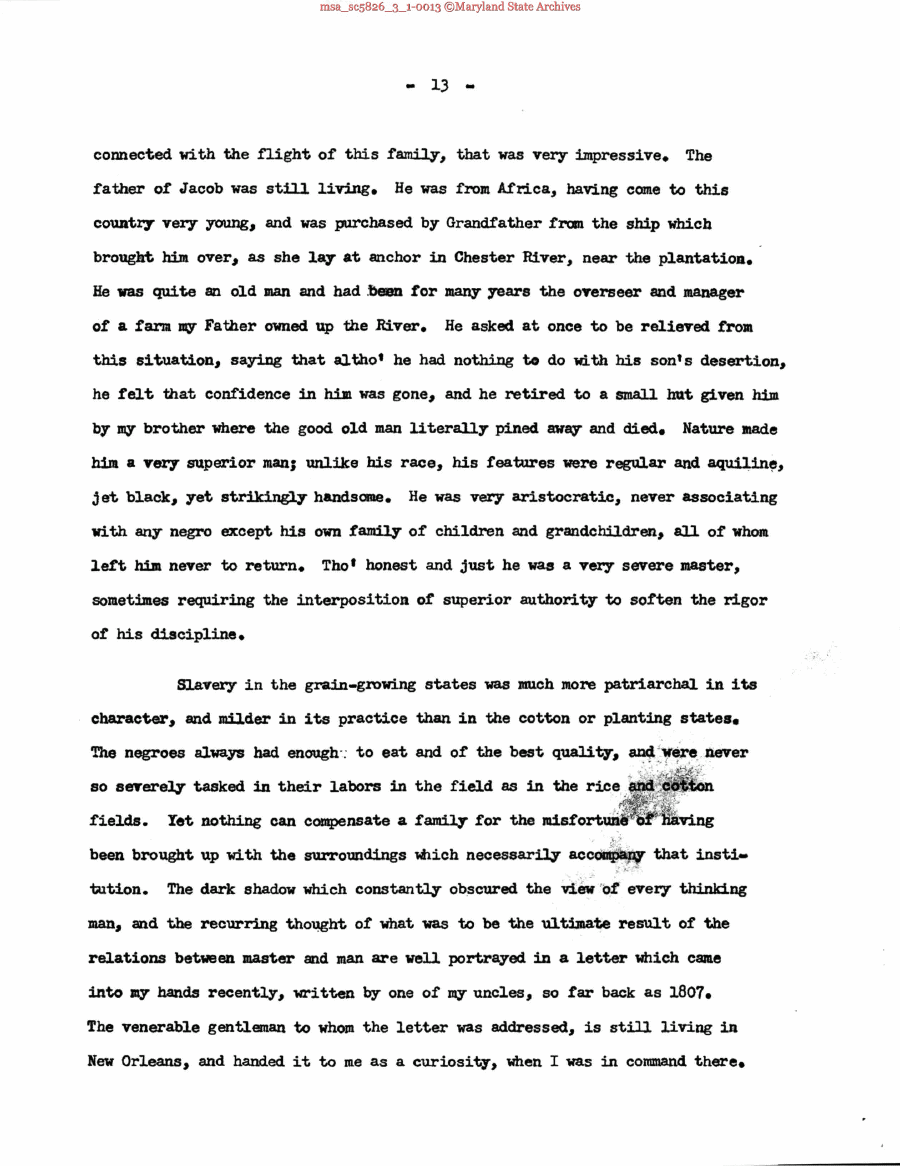
| msa_sc5826_3_1-0013 ©Maryland State Archives - 13 - connected with the flight of this family, that was very impressive. The father of Jacob was still living. He was from Africa, having come to this country very young, and was purchased by Grandfather from the ship which brought him over, as she lay at anchor in Chester River, near the plantation. He was quite an old man and had been for many years the overseer and manager of a farm my Father owned up the River. He asked at once to be relieved from this situation, saying that altho' he had nothing to do with his son's desertion, he felt that confidence in him was gone, and he retired to a small hut given him by my brother where the good old man literally pined away and died. Nature made him a very superior man; unlike his race, his features were regular and aquiline, jet black, yet strikingly handsome. He was very aristocratic, never associating with any negro except his own family of children and grandchildren, all of whom left him never to return. Tho' honest and just he was a very severe master, sometimes requiring the interposition of superior authority to soften the rigor of his discipline. Slavery in the grain-growing states was much more patriarchal in its character, and milder in its practice than in the cotton or planting states. The negroes always had enough to eat and of the best quality, and were never so severely tasked in their labors in the field as in the rice and cotton fields. Yet nothing can compensate a family for the misfortune of having been brought up with the surroundings which necessarily accompany that insti- tution. The dark shadow which constantly obscured the view of every thinking man, and the recurring thought of what was to be the ultimate result of the relations between master and man are well portrayed in a letter which came into my hands recently, written by one of my uncles, so far back as 1807. The venerable gentleman to whom the letter was addressed, is still living in New Orleans, and handed it to me as a curiosity, when I was in command there. |