 |
|
|
 |
|
 |
|
|||
|
||||
|
||||
|
Maryland State Archives Adam Goodheart Collection MSA SC 5826 msa_sc5826_3_1-0028 Enlarge and print image (926K) |
|
|
|
|
|
|
|
|||
|
||||
|
||||
|
Maryland State Archives Adam Goodheart Collection MSA SC 5826 msa_sc5826_3_1-0028 Enlarge and print image (926K) |
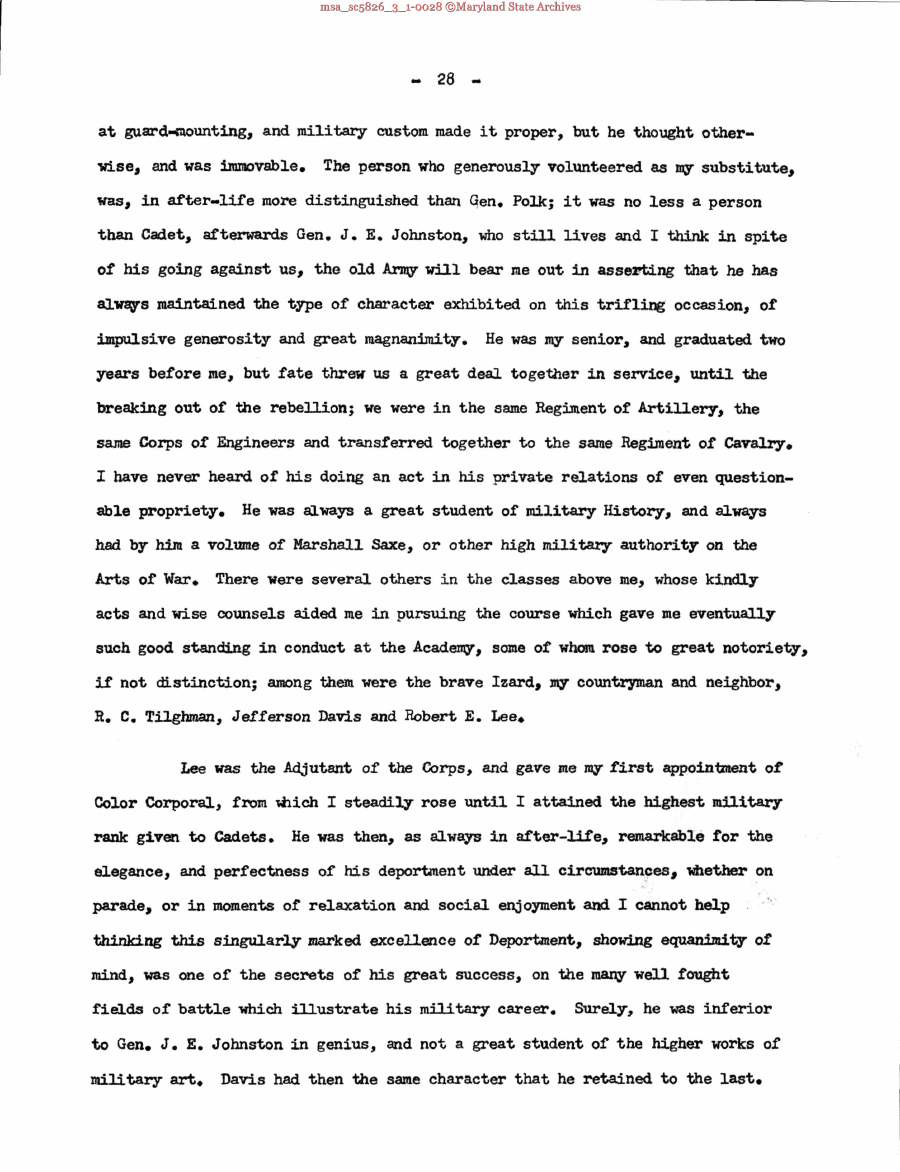
| msa_sc5826_3_l-0028 ©Maryland State Archives - 28 - at guard-mounting, and military custom made it proper, but he thought other- wise, and was immovable. The person who generously volunteered as my substitute, was, in after-life more distinguished than Gen. Polk; it was no less a person than Cadet, afterwards Gen. J. E. Johnston, who still lives and I think in spite of his going against us, the old Army will bear me out in asserting that he has always maintained the type of character exhibited on this trifling occasion, of impulsive generosity and great magnanimity. He was my senior, and graduated two years before me, but fate threw us a great deal together in service, until the breaking out of the rebellion; we were in the same Regiment of Artillery, the same Corps of Engineers and transferred together to the same Regiment of Cavalry, I have never heard of his doing an act in his private relations of even question- able propriety. He was always a great student of military History, and always had by him a volume of Marshall Saxe, or other high military authority on the Arts of War. There were several others in the classes above me, whose kindly acts and wise counsels aided me in pursuing the course which gave me eventually such good standing in conduct at the Academy, some of whom rose to great notoriety, if not distinction; among them were the brave Izard, my countryman and neighbor, R. C. Tilghman, Jefferson Davis and Robert E. Lee. Lee was the Adjutant of the Corps, and gave me ray first appointment of Color Corporal, from which I steadily rose until I attained the highest military rank given to Cadets. He was then, as always in after-life, remarkable for the elegance, and perfectness of his deportment under all circumstances, whether on parade, or in moments of relaxation and social enjoyment and I cannot help thinking this singularly marked excellence of Deportment, showing equanimity of mind, was one of the secrets of his great success, on the many well fought fields of battle which illustrate his military career. Surely, he was inferior to Gen. J. E. Johnston in genius, and not a great student of the higher works of military art. Davis had then the same character that he retained to the last. |