 |
|
|
 |
|
 |
|
|||
|
||||
|
||||
|
|
|
|
|
|
|
|||
|
||||
|
||||
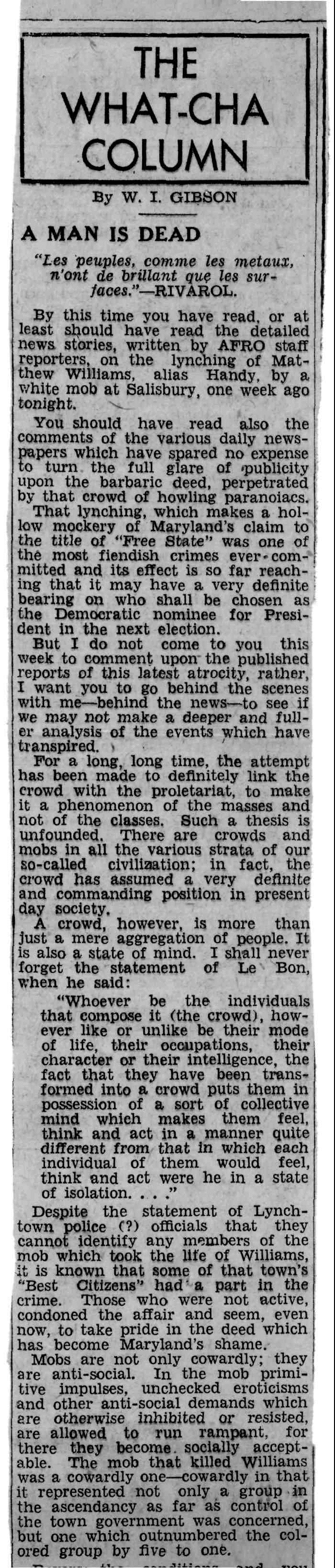
| THE WHAT-CHA COLUMN By W. I. GIBSON A MAN IS DEAD "Les peuples, comme les metaux, n'ont de brillant que les surfaces."—RIVAROL. By this time you have read, or at least should have read the detailed news stories, written by AFRO staff reporters, on the lynching of Matthew Williams, alias Handy, by a white mob at Salisbury, one week ago tonight. v You should have read also the comments of the various daily newspapers which have spared no expense to turn the full glare of ipublicity upon the barbaric deed, perpetrated by that crowd of howling paranoiacs. That lynching, which makes a hollow mockery of Maryland's claim to the title of "Free State" was one of the most fiendish crimes ever - com- , mitted and its effect is so far reach-ing that it may have a very definite bearing on who shall be chosen as the Democratic nominee for President in the next election. But I do not come to you this week to comment upon the published reports of this latest atrocity, rather, I want you to go behind the scenes with me—behind the news—to see if we may not make a deeper and fuller analysis of the events which have transpired. < For a long, long time, the attempt has been made to definitely link the crowd with the proletariat, to make it a phenomenon of the masses and not of the classes. Such a thesis is unfounded. There are crowds and mobs in all the various strata of our so-called civiliaation; in fact, the crowd has assumed a very definite and commanding position in present day society. A crowd, however, is more than just a mere aggregation of people. It is also a state of mind. I shall never forget the statement of Le Bon, when he said: "Whoever be the individuals that compose it (the crowd), however like or unlike be their mode of life, their occupations, their character or their intelligence, the fact that they have been transformed into a crowd puts them in possession of a sort of collective mind which makes them feel, think and act in a manner quite different from that in which each individual of them would feel, think and act were he in a state of isolation. . . ." Despite the statement of Lynch-town police C?) officials that they cannot identify any members of the mob which took the life of Williams, it is known that some of that town's "Best Citizens" had' a part in the crime. Those who were not active, condoned the affair and seem, even now, to take pride in the deed which has become Maryland's shame. Mobs are not only cowardly; they are anti-social. In the mob primi-'' tive impulses, unchecked eroticisms and other anti-social demands which are otherwise inhibited or resisted, are allowed to run rampant, for there they become, socially acceptable. The mob that killed Williams was a cowardly one—cowardly in that it represented not only a group in the ascendancy as far as control of the town government was concerned, but one which outnumbered the colored group by five to one. |