 |
|
|
 |
|
 |
|
|||
|
||||
|
||||
|
|
|
|
|
|
|
|||
|
||||
|
||||
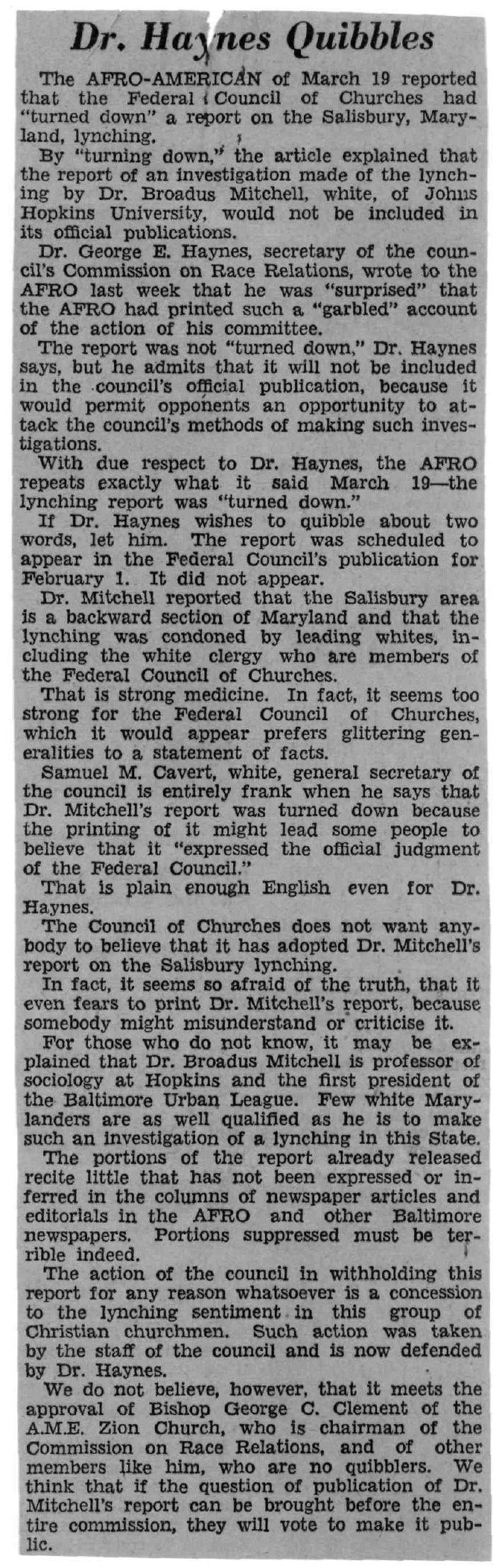
| Dr. Haynes Quibbles The AFRO-AMERICAN of March 19 reported that the Federal i Council of Churches had "turned down" a report on the Salisbury, Maryland, lynching. i By "turning down,'* the article explained that the report of an investigation made of the lynching by Dr. Broadus Mitchell, white, of Johns Hopkins University, would not be included in its official publications. Dr. George E. Haynes, secretary of the council's Commission on Race Relations, wrote to the AFRO last week that he was "surprised" that the AFRO had printed such a "garbled" account of the action of his committee. The report was not "turned down," Dr. Haynes says, but he admits that it will not be included in the council's official publication, because it would permit opponents an opportunity to attack the council's methods of making such investigations. With due respect to Dr. Haynes, the AFRO repeats exactly what it said March 19—the lynching report was "turned down." If Dr. Haynes wishes to quibble about two words, let him. The report was scheduled to appear in the Federal Council's publication for February 1. It did not appear. Dr. Mitchell reported that the Salisbury area is a backward section of Maryland and that the lynching was condoned by leading whites, including the white clergy who are members of the Federal Council of Churches. That is strong medicine. In fact, it seems too strong for the Federal Council of Churches, which it would appear prefers glittering generalities to a statement of facts. Samuel M. Cavert, white, general secretary of the council is entirely frank when he says that Dr. Mitchell's report was turned down because the printing of it might lead some people to believe that it "expressed the official judgment of the Federal Council." That is plain enough English even for Dr. Haynes. The Council of Churches does not want anybody to believe that it has adopted Dr. Mitchell's report on the Salisbury lynching. In fact, it seems so afraid of the truth, that it even fears to print Dr. Mitchell's report, because somebody might misunderstand or' criticise it. For those who do not know, it may be explained that Dr. Broadus Mitchell is professor of sociology at Hopkins and the first president of the Baltimore Urban League. Few white Mary-landers are as well qualified as he is to make such an investigation of a lynching in this State. The portions of the report already released recite little that has not been expressed or inferred in the columns of newspaper articles and editorials in the AFRO and other Baltimore newspapers. Portions suppressed must be terrible indeed. ' The action of the council in withholding this report for any reason whatsoever is a concession to the lynching sentiment in this group of Christian churchmen. Such action was taken by the staff of the council and is now defended by Dr. Haynes. We do not believe, however, that it meets the approval of Bishop George C. Clement of the A.M.E. Zion Church, who is chairman of the Commission on Race Relations, and of other members Jike him, who are no quibblers. We think that if the question of publication of Dr. Mitchell's report can be brought before the entire commission, they will vote to make it pub lie. |