 |
|
|
 |
|
 |
|
|||
|
||||
|
||||
|
|
|
|
|
|
|
|||
|
||||
|
||||
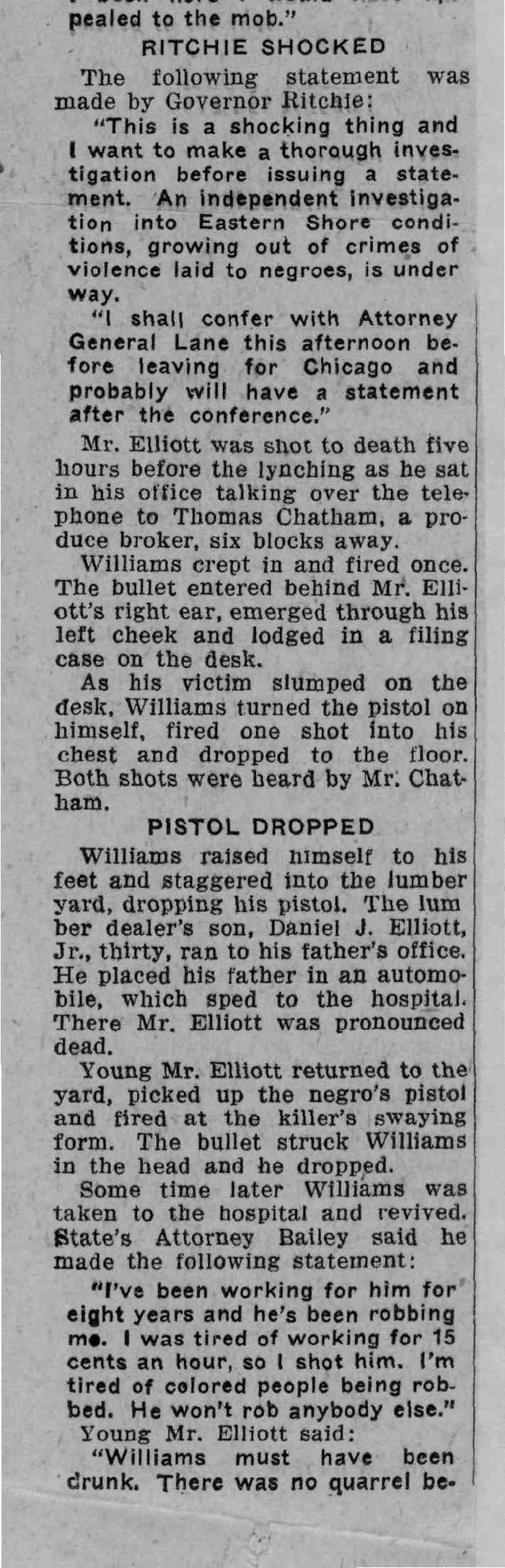
| pealed to the mob." RITCHIE SHOCKED The following statement was made by Governor Ritchie: "This is a shocking thing and I want to make a thorough investigation before issuing a statement. An independent investigation into Eastern Shore conditions, growing out of crimes of violence laid to negroes, is under way. "I shall confer with Attorney General Lane this afternoon before leaving for Chicago and probably will have a statement after the conference." Mr. Elliott was shot to death five hours before the lynching as he sat In his office talking over the telephone to Thomas Chatham, a produce broker, six blocks away. Williams crept in and fired once. The bullet entered behind Mr. Elliott's right ear, emerged through his left cheek and lodged in a filing case on the desk. As his victim slumped on the desk, Williams turned the pistol on himself, fired one shot into his chest and dropped to the floor. Both shots were heard by Mr: Chatham. PISTOL DROPPED Williams raised himself to his feet and staggered into the lumber yard, dropping his pistol. The lum ber dealer's son, Daniel J. Elliott, Jr., thirty, ran to his father's office. He placed his father in an automobile, which sped to the hospital. There Mr. Elliott was pronounced dead. Young Mr. Elliott returned to the yard, picked up the negro's pistol and fired at the killer's swaying form. The bullet struck Williams in the head and he dropped. Some time later Williams was taken to the hospital and revived. State's Attorney Bailey said he made the following statement: "f've been working for him for eight years and he's been robbing m«. I was tired of working for 15 cents an hour, so I shot him. I'm tired of colored people being robbed. He won't rob anybody else." Young Mr. Elliott said: "Williams must have been drunk. There was no quarrel be- |