 |
|
|
 |
|
 |
|
|||
|
||||
|
||||
|
|
|
|
|
|
|
|||
|
||||
|
||||
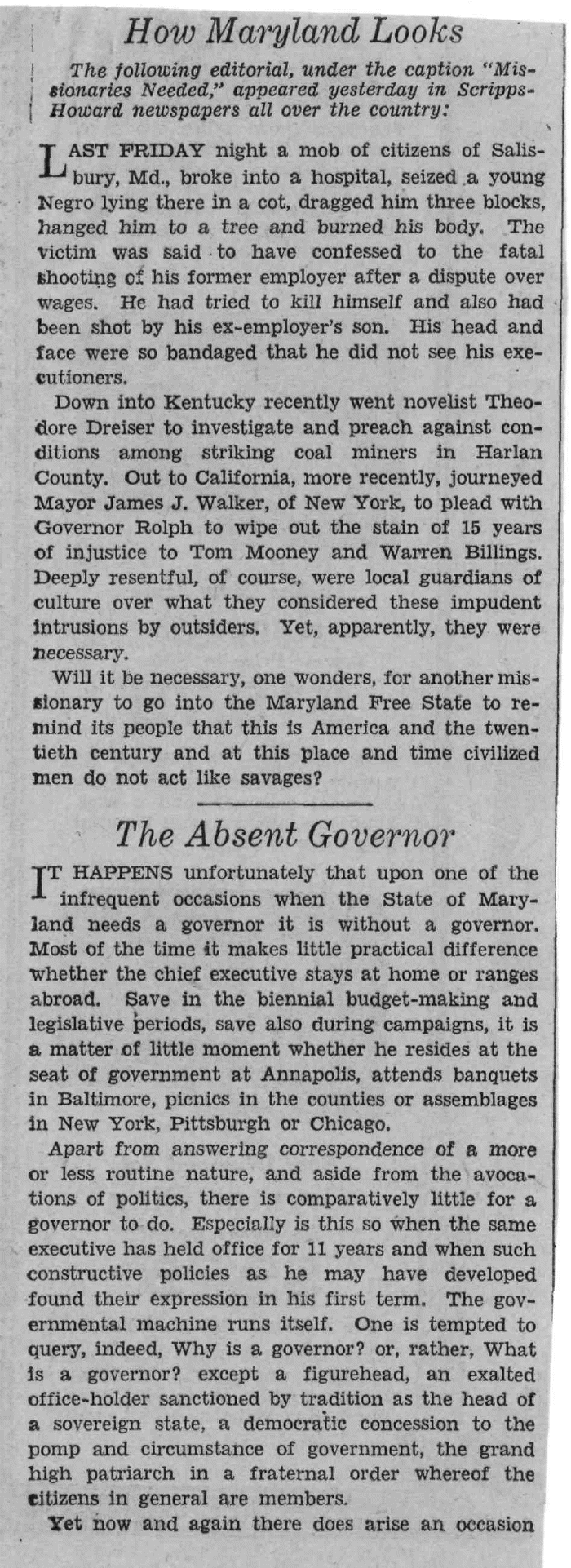
| How Maryland Looks l The following editorial, under the caption "Mis-', tianaries Needed," appeared yesterday in Scripps-j Howard newspapers all over the country: T AST FRIDAY night a mob of citizens of Salis-¦"-^ bury, Md., broke into a hospital, seized a young Negro lying there in a cot, dragged him three blocks, hanged him to a tree and burned his body. The Victim was said to have confessed to the fatal shooting of his former employer after a dispute over wages. He had tried to kill himself and also had been shot by his ex-employer's son. His head and face were so bandaged that he did not see his executioners. Down into Kentucky recently went novelist Theodore Dreiser to investigate and preach against conditions among striking coal miners in Harlan County. Out to California, more recently, journeyed Mayor James J. Walker, of New York, to plead with Governor Rolph to wipe out the stain of 15 years of injustice to Tom Mooney and Warren Billings. Deeply resentful, of course, were local guardians of culture over what they considered these impudent intrusions by outsiders. Yet, apparently, they were necessary. Will it be necessary, one wonders, for another missionary to go into the Maryland Free State to remind its people that this is America and the twentieth century and at this place and time civilized men do not act like savages? The Absent Governor TT HAPPENS unfortunately that upon one of the ¦*¦ infrequent occasions when the State of Maryland needs a governor it is without a governor. Most of the time it makes little practical difference whether the chief executive stays at home or ranges abroad. Save in the biennial budget-making and legislative periods, save also during campaigns, it is a matter of little moment whether he resides at the seat of government at Annapolis, attends banquets in Baltimore, picnics in the counties or assemblages in New York, Pittsburgh or Chicago. Apart from answering correspondence of a more or less routine nature, and aside from the avocations of politics, there is comparatively little for a governor to do. Especially is this so when the same executive has held office for 11 years and when such constructive policies as he may have developed found their expression in his first term. The gov- j ernmental machine runs itself. One is tempted to query, indeed, Why is a governor? or, rather, What is a governor? except a figurehead, an exalted office-holder sanctioned by tradition as the head of a sovereign state, a democratic concession to the pomp and circumstance of government, the grand high patriarch in a fraternal order whereof the citizens in general are members. Yet now and again there does arise an occasion |