 |
|
|
 |
|
 |
|
|||
|
||||
|
||||
|
|
|
|
|
|
|
|||
|
||||
|
||||
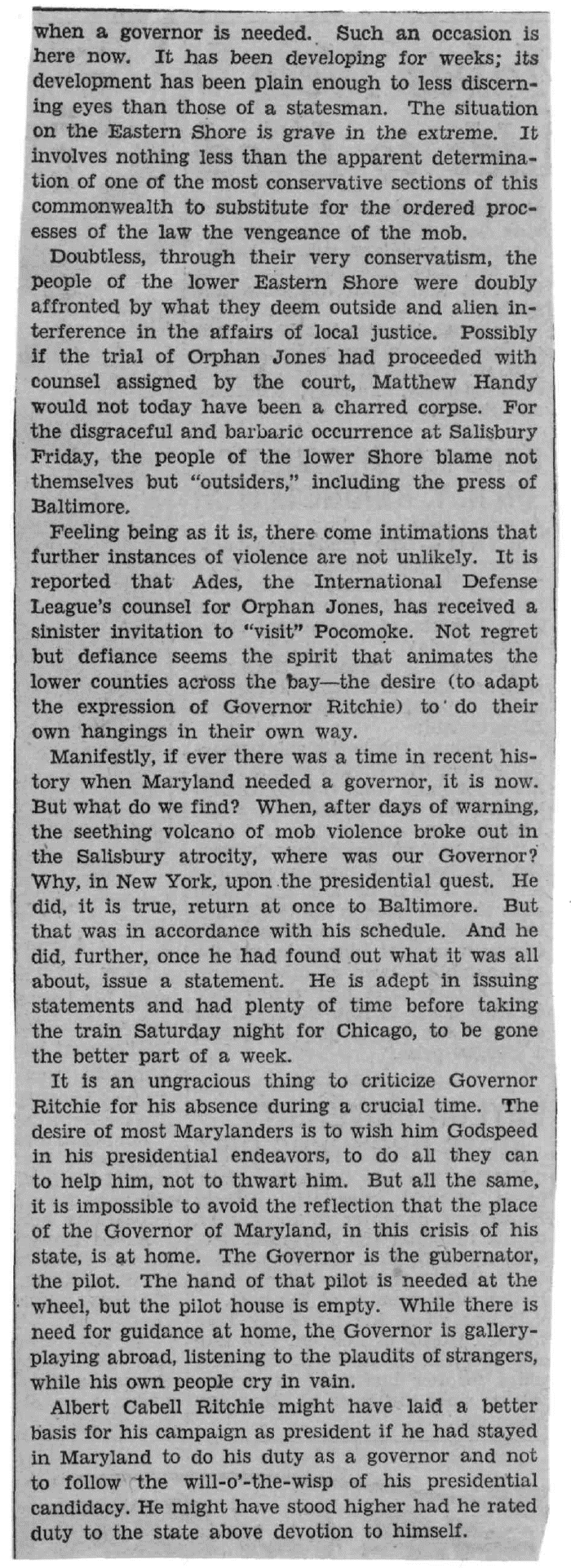
| when a governor is needed. Such an occasion is here now. It has been developing for weeks; its development has been plain enough to less discerning eyes than those of a statesman. The situation on the Eastern Shore is grave in the extreme. It involves nothing less than the apparent determination of one of the most conservative sections of this commonwealth to substitute for the ordered processes of the law the vengeance of the mob. Doubtless, through their very conservatism, the people of the lower Eastern Shore were doubly affronted by what they deem outside and alien interference in the affairs of local justice. Possibly if the trial of Orphan Jones had proceeded with counsel assigned by the court, Matthew Handy would not today have been a charred corpse. For the disgraceful and barbaric occurrence at Salisbury Friday, the people of the lower Shore blame not themselves but "outsiders," including the press of Baltimore. Feeling being as it is, there come intimations that further instances of violence are not unlikely. It is reported that Ades, the International Defense League's counsel for Orphan Jones, has received a sinister invitation to "visit" Focompke. Not regret but defiance seems the spirit that animates the lower counties across the bay—the desire (to adapt the expression of Governor Ritchie) to' do their own hangings in their own way. Manifestly, if ever there was a time in recent history when Maryland needed a governor, it is now. But what do we find? When, after days of warning, the seething volcano of mob violence broke out in the Salisbury atrocity, where was our Governor? Why, in New York, upon the presidential quest. He did, it is true, return at once to Baltimore. But that was in accordance with his schedule. And he did, further, once he had found out what it was all about, issue a statement. He is adept in issuing statements and had plenty of time before taking the train Saturday night for Chicago, to be gone the better part of a week. It is an ungracious thing to criticize Governor Ritchie for his absence during a crucial time. The desire of most Marylanders is to wish him Godspeed in his presidential endeavors, to do all they can to help him, not to thwart him. But all the same, it is impossible to avoid the reflection that the place of the Governor of Maryland, in this crisis of his state, is at home. The Governor is the gubernator, the pilot. The hand of that pilot is needed at the wheel, but the pilot house is empty. While there is need for guidance at home, the Governor is gallery-playing abroad, listening to the plaudits of strangers, while his own people cry in vain. Albert Cabell Ritchie might have laid a better basis for his campaign as president if he had stayed in Maryland to do his duty as a governor and not to follow the will-o'-the-wisp of his presidential candidacy. He might have stood higher had he rated duty to the state above devotion to himself. |